Manufactured Desire
1
2
3
4
5
Manufactured Desire
The Thief Of Darkness
Artificial light was once a symbol of progress. Today, it has become a constant, embedded into homes, workplaces, cities, and everyday life. The modern lighting boom is built on convenience, but that convenience comes with consequences that are largely ignored. These consequences are often discussed in theory, but they are already visible in everyday life. On city streets, lights remain on long after they are needed, flooding neighborhoods through the night. In homes outdoor lighting stays illuminated from dusk until morning. In natural environments, artificial light disrupts ecosystems, contributing to the decline of insect population, and disorienting migratory birds. These are not isolated incidents, they are the result of a system designed to prioritize constant illumination.
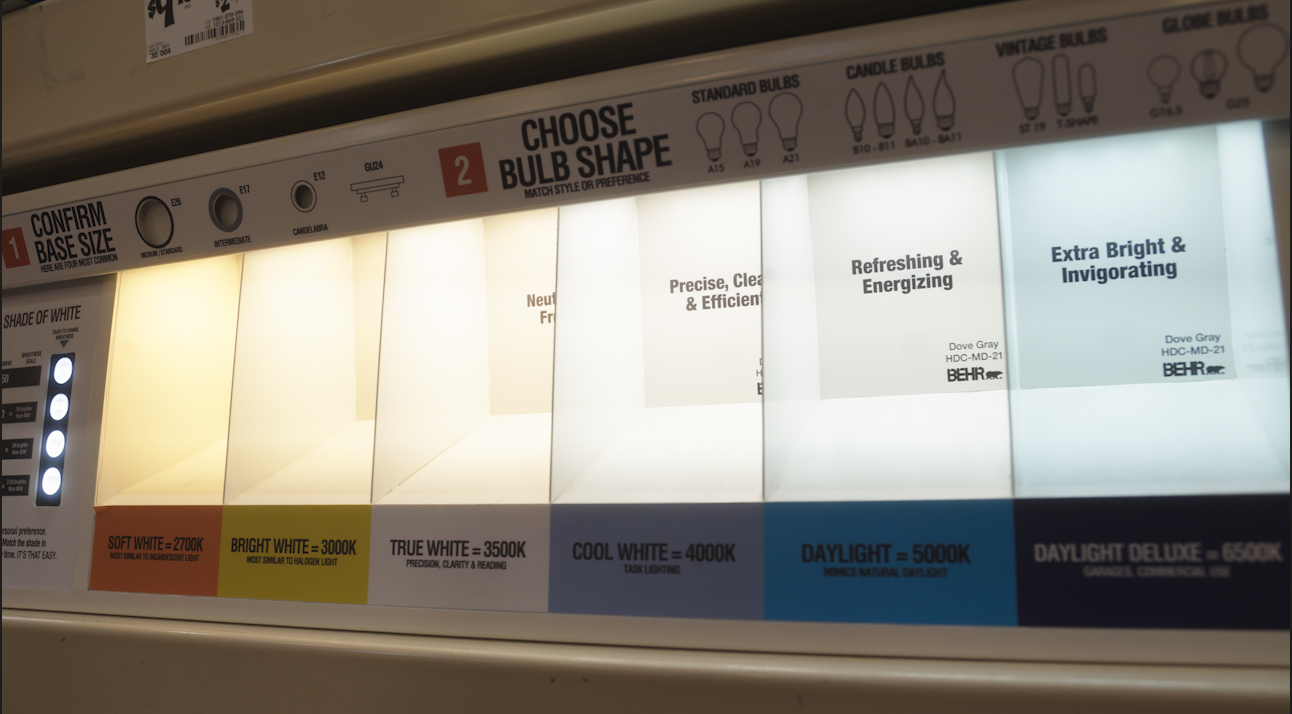
Courtesy of: Liam Simard
“Between 2015 and 2020, the percentage of households that use LED lighting for most or all their indoor lighting has risen from 4% to 47%.”
Peterson, Neil. “LED Lighting Statistics to Know in 2022.” LED Lighting Supply, 25 May 2022 (last updated 3 Oct. 2025), www.ledlightingsupply.com/blog/led-lighting-statistics-to-know-in-2022.
Industry
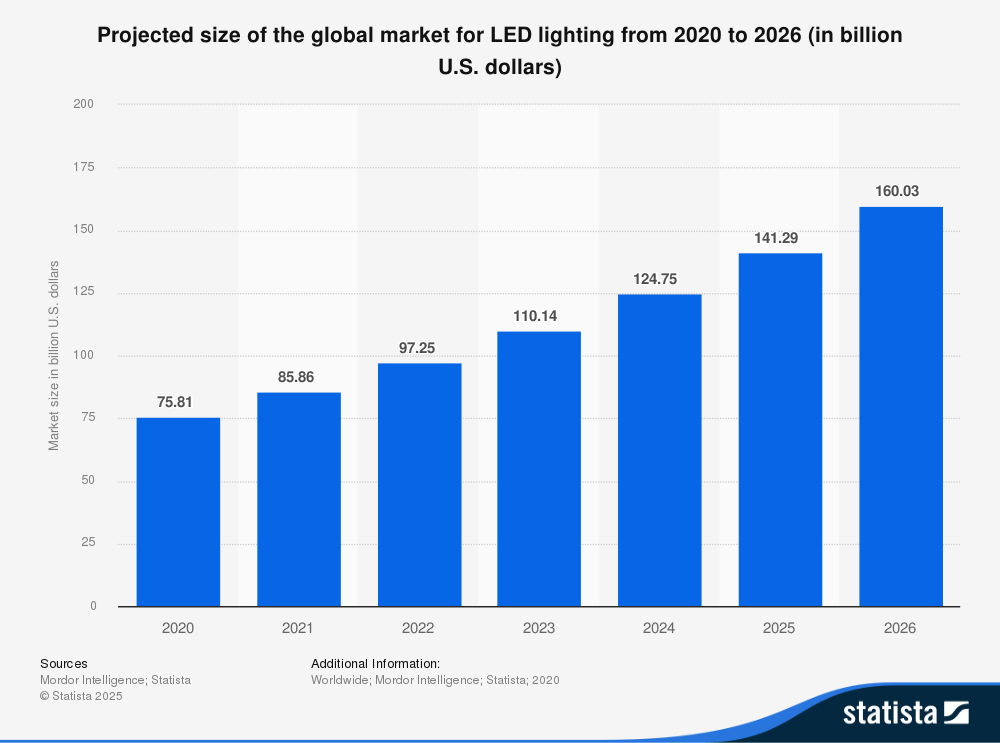
Over the course of the past century, we have seen major shifts in all lighting. In particular, we have grown the most over the past 6 years. According to this Statista graph and cross-referencing with other research. The Global LED Lighting Market has climbed from an astonishing 75.81 billion US Dollars in 2020 to an unfathomable 160.03 billion in 2026. This Statista graph shows that it has been updated to 2025. This is over an 84 billion dollar increase over the course of 6 years.
McLaren, J. D., Buler, J. J., Schreckengost, T., Smolinsky, J. A., Boone, M., van Loon, E. E., Dawson, D. K., & Walters, E. L. (2018). Artificial light at night confounds broad-scale habitat use by migrating birds. Ecology Letters, 21(3), 356–364. https://doi.org/10.1111/ele.12902
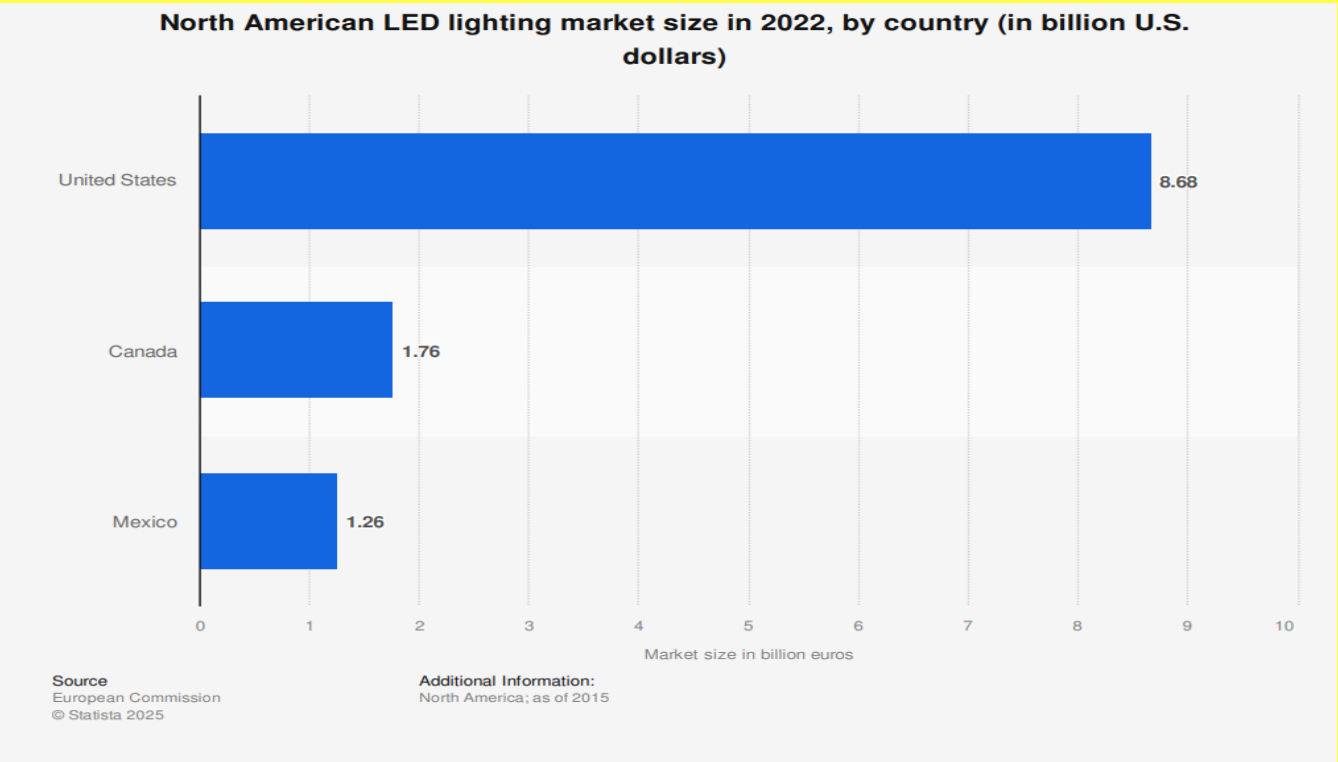
When light is this widespread and embedded in infrastructure, design, and daily behavior the question becomes harder to ignore: who is responsible for a world that no longer goes dark? We have found that the answer is not simple, responsibility does not fall on a single source. It's shared across industries, governments, and individuals, each playing a role in keeping the lights on.

Policies & Priorities: Between regulations and what doctors call for.
In the United States, most lighting regulations are designed around efficiency, safety and visibility.
Policies driven by legislation like the Energy Independence and Security Acts have pushed the transition toward high-efficiency lighting, particularly LEDs. Standards from the Department of Energy focus on increasing brightness per unit of energy, across homes, streets, and industrial and commercial spaces.
While some state-level dark sky initiatives attempt to reduce light pollution through shielding and direction, they remain limited compared to efficiency standards. In most cases, regulations are being designed to make lighting better, not less.
Federal and state regulations are shaping the lighting market, but their focus is largely on efficiency and environmental safety, not human health.
Federal Rules
Federal Rules: Most residential and commercial light bulbs must meet minimum energy efficiency standards, currently 45 lumens per watt, phasing out most incandescent and halogen bulbs. In 2028 the minimum will rise to 120 lumens per watt, favoring LEDs and continuing to phase out most CFLs due to both efficiency and environmental concerns. (Anderson, 2024)
State Level Rules
State Level Rules: Some states have added restrictions, particularly on CFLs and fluorescent tubes. These measures go beyond federal efficiency rules, with the goal of reducing environmental hazards. (Anderson, 2024)
Cities & Infrastructure
Cities & infrastructure: Urban design prioritizes visibility and safety, often resulting in spaces that remain illuminated long after they are needed. This is reinforced by recent policy changes. Federal regulations that phased out incandescent and halogen lamps in 2023, along with state-level bans on fluorescent lighting like in California, Vermont, and Washington, have driven widespread replacement with LEDs. While intended to improve efficiency, these transitions have increased demand for new lighting systems, often resulting in brighter and broader illumination.
Expert Recommendations
What Experts Recommend
Medical and scientific research suggests a different story on regulations. Rather than increasing light, experts emphasize the importance of limiting exposure, especially at night.
Recommendations focus on reducing brightness, minimizing blue light and allowing the body to experience uninterrupted periods of darkness, especially at night.
Other suggestions
Using warmer, dimmer lights like red light, which is less likely to shift circadian rhythm and suppress melatonin.
Avoid looking at bright screens beginning two to three hours before bed.
If you work a night shift or use a lot of electronic devices at night, consider wearing blue light glasses.
Expose yourself to lots of bright light during the day.
The sleep environment should be as dark as possible.
Restful Lamp

Individuals
At the same time, everyday choices like porch lights, decorative lighting, and always-on interiors help contribute to a culture where darkness is no longer expected.