Robbed Of Darkness
1
2
3
4
5
Robbed of Darkness
The Lack of Understanding
For most of human history, life has existed in rhythm- bright days followed by dark nights. That contrast shaped everything, from the movement of animals to the way our own bodies rest and reset.
But that rhythm is beginning to fade.
Not all at once, but piece by piece – fading stars, shortened nights, and a sky that no longer feels natural. What's disappearing isn't just the view, but a natural rhythm, sense of balance, and feeling we once depended on.
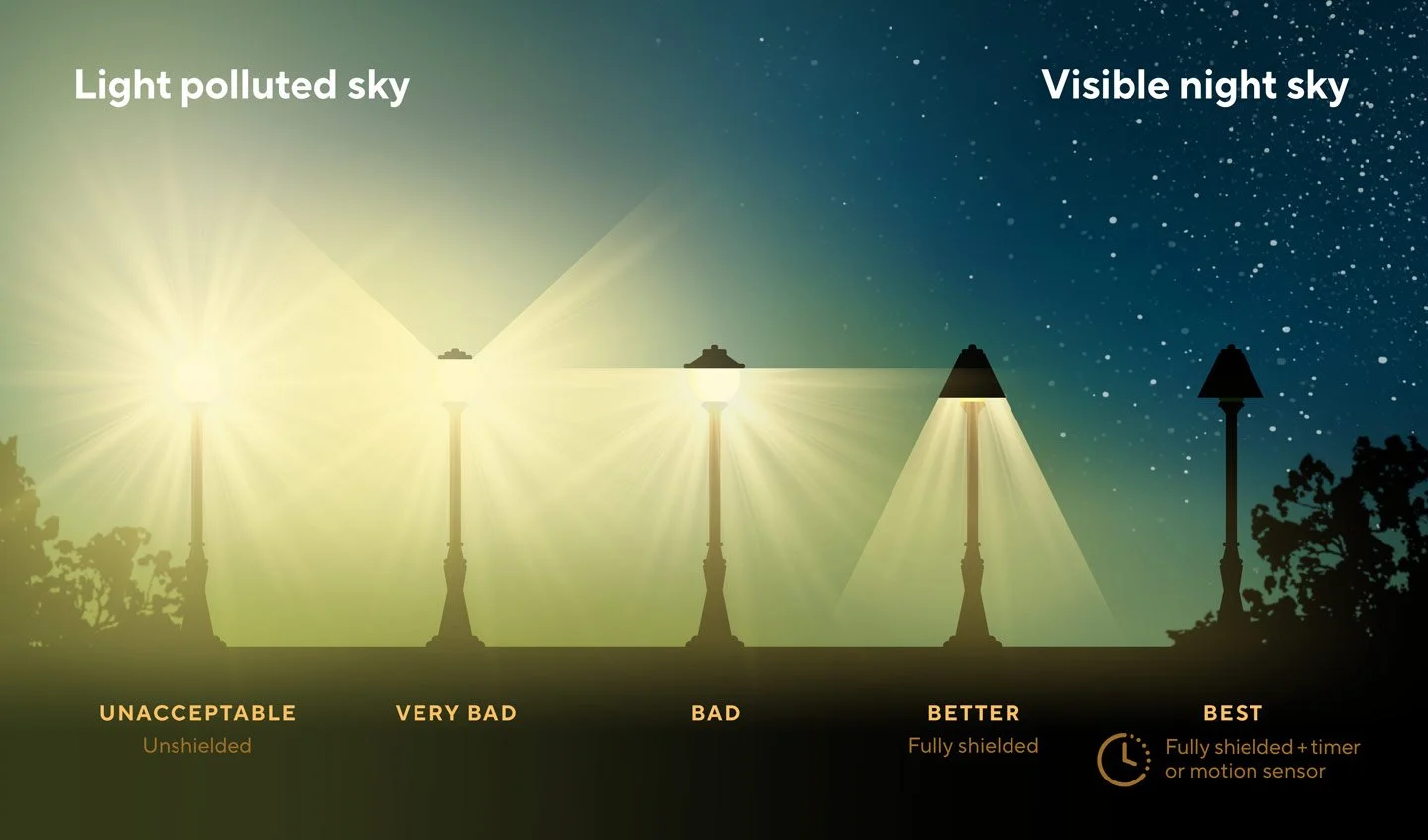
Credit: Dark Skys
Light Pollution Definition
“The existence of too much artificial light in the environment, for example, from street lights, which makes it difficult to see the stars”
(Oxford Dictionary)
What we’re up against
What we're up against isn't just light, it's how we use it
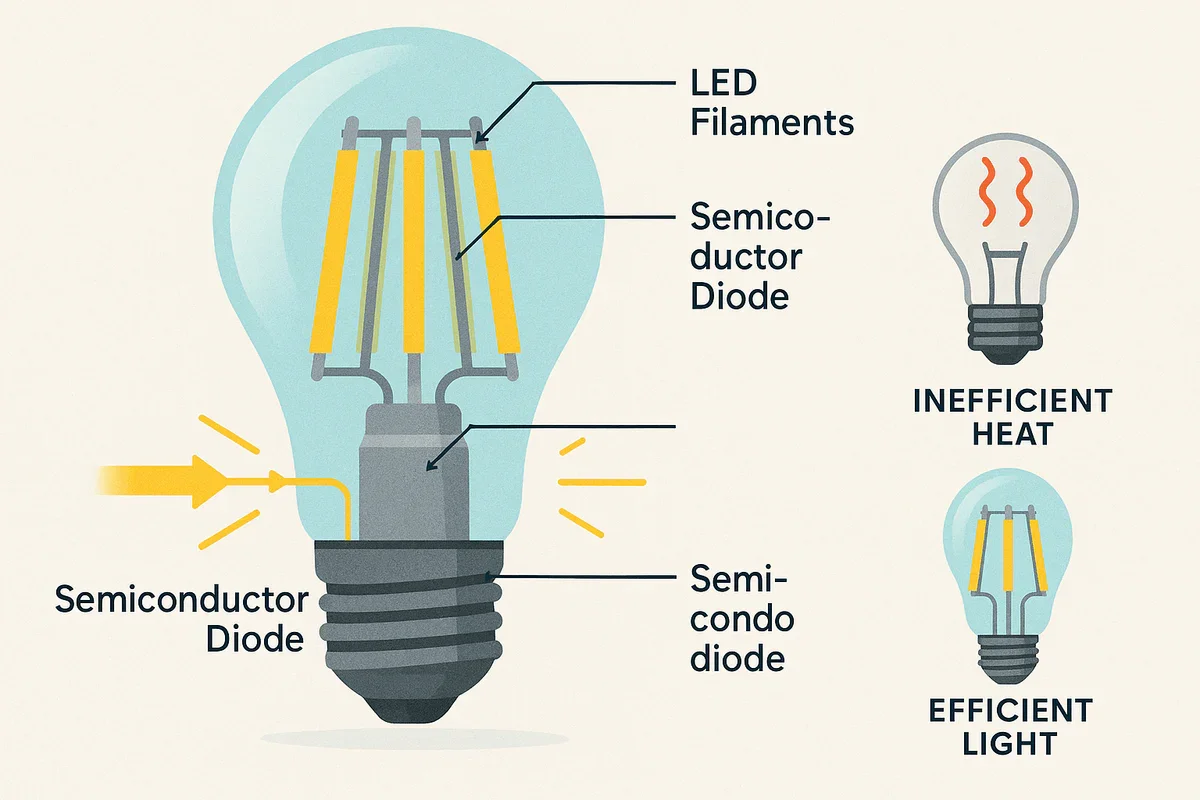
Over the past 25 to 30 years, artificial light has become so common, so expected, that it is rarely questioned. The new trend of energy-efficient lighting, such as LEDs (Light-emitting Diodes), has been widely adopted, and it has also contributed to an increase in overall lighting usage worldwide. LEDs, in particular, are semiconductor diodes which glow when a voltage is applied.
Different artificial lighting has become a part of our modern environments, which often prioritize constant illumination, reinforcing a culture where more light is seen as better and safer. Artificial light offers undeniable convenience, extending our days and increasing visibility through the night. This sort of convenience comes with consequences that aren’t simply overlooked; it’s the notion that most people are unaware that this is even happening.
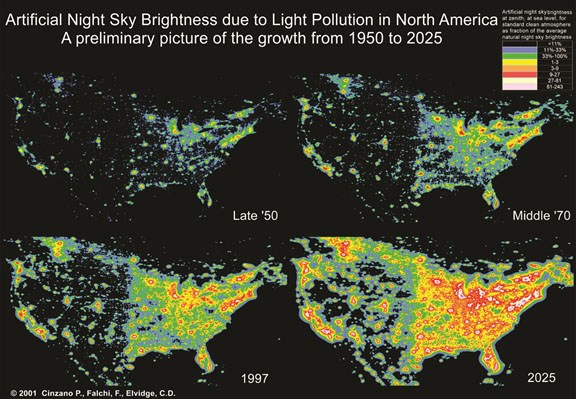
(Credit: National Park Service - March 24, 2025)
“A groundbreaking new study documenting light pollution across the globe finds that more than 80 percent of the world’s population lives under light-polluted skies.
The United States and Europe have it even worse, with 99 percent of their denizens experiencing skyglow at night.”
(DarkSky, 2016)
The Artificial Shift
The rise of LED lighting marked a major shift
Introduced as a more efficient, longer-lasting, and cheaper solution, LEDs promised to reduce energy use and improve sustainability. But instead of reducing light, they’ve led to more of it.
As lighting became cheaper and more accessible, it became more widespread. Streets grew brighter, buildings stayed illuminated longer, and darkness began to disappear.
Important Terms
Glare — excessive brightness that causes visual discomfort
Sky glow — brightening of the night sky over inhabited areas
Light trespass — light falling where it is not intended or needed
Clutter — bright, confusing, and excessive groupings of light sources
LEDs — a highly energy efficient, long-lasting light used in devices that produce a light on electrical and electronic equipment
(Credit 1-4: Dark Skys) (Credit 5: Oxford Dictionary)
Credit: Michael Moskvin - August 27, 2025
The Stolen Natural Right
Artificial light offers undeniable benefits. It extends our days, increases visibility, and supports modern life. But that convenience comes at a cost. We're not just losing the night sky, we're losing our connection to natural cycles. Constant exposure to artificial light disrupts circadian rhythms, affecting sleep and the body’s internal 24-hour clock.
Artificial light at night (ALAN) suppresses melatonin–the hormone that regulates sleep and disrupts the body's internal clock. Over time, this disruption has been linked to sleep disorders, anxiety, depression, and increased risks for long-term health issues like heart disease.
What's being taken from us isn't just darkness. It's rest, balance, and a sense of place in the natural world.
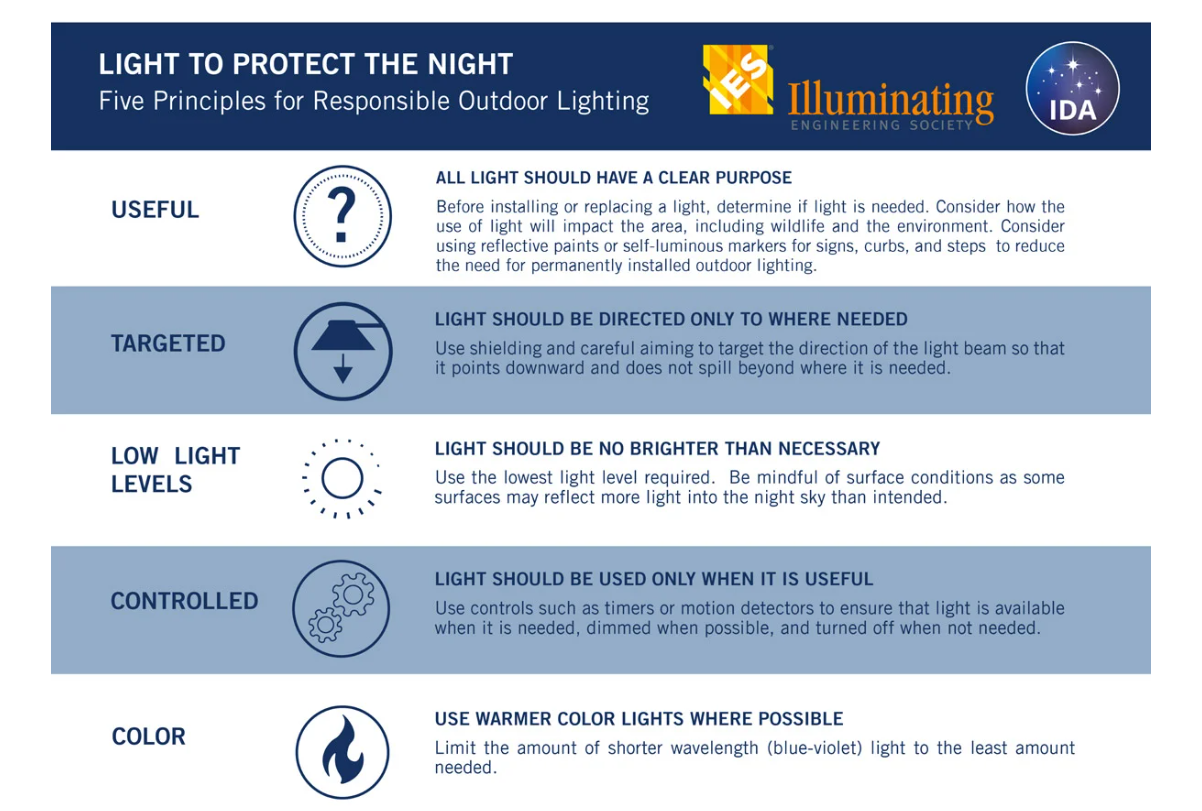
Credit: Illuminating Engineering Society
Infographic: Of The Combined Efforts of the Illuminating Engineering Society, with the help of the Dark Sky Movement, to protect the night sky with 5 simple steps. These guidelines are in place to help lead the way for individuals to buy better lighting for the betterment of our world.