The Invisible Killer
1
2
3
4
5
The Invisible Killer
The Hidden Cost of Lighting Up Our World
Artificial Light at Night (ALAN) has been slowly transforming how humans experience darkness. Through a mixture of different types of lighting: Tv’s, Phones, Computers, and most outdoor lighting. The negative impacts are far worse than you could have imagined.
What if you were able to see how these were affecting you? From an outside perspective? What if you finally realized how essential darkness truly is?
A better question is, what if these roles were reversed? What if, one day, you woke up and the sun was suddenly blocked out? The loss would be immediately apparent, undeniable, and truly unfathomable. We continue to recognize daily, suddenly, how daylight is essential to life.
Darkness is no different.
It is one of our natural resources, and without it, life would be forever changed.
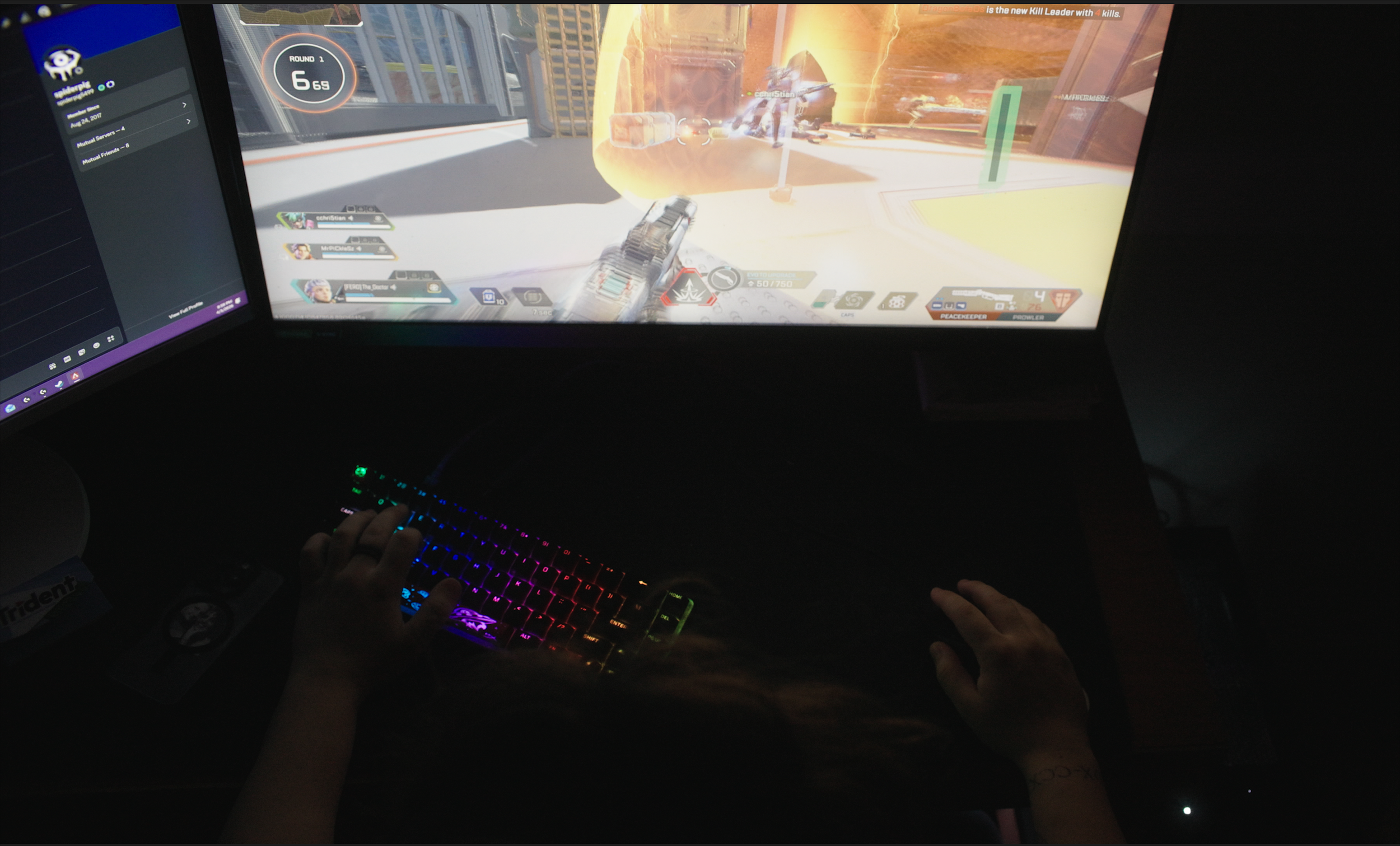
Courtesy of Liam Simard
Disrupted Rhythms
For millions of years, human life has followed a consistent cycle of light and dark. That cycle is built into our biology through what's known as the circadian rhythm–a roughly 24-hour internal clock that regulates when we feel awake and when we feel tired.
Research has shown that even without external light cues, the body maintains this natural rhythm. In isolation studies, like cave experiments where participants lived without sunlight, people still followed a predictable steep-wake cycle–evidence of how deeply this pattern is ingrained.
But artificial light is disrupting that system.
Exposure to light at night, especially from screens and modern lighting interferes with the body's ability to recognize when it's time to rest. Even a small amount of light, like a phone in bed, can delay sleep and shift your internal clock.
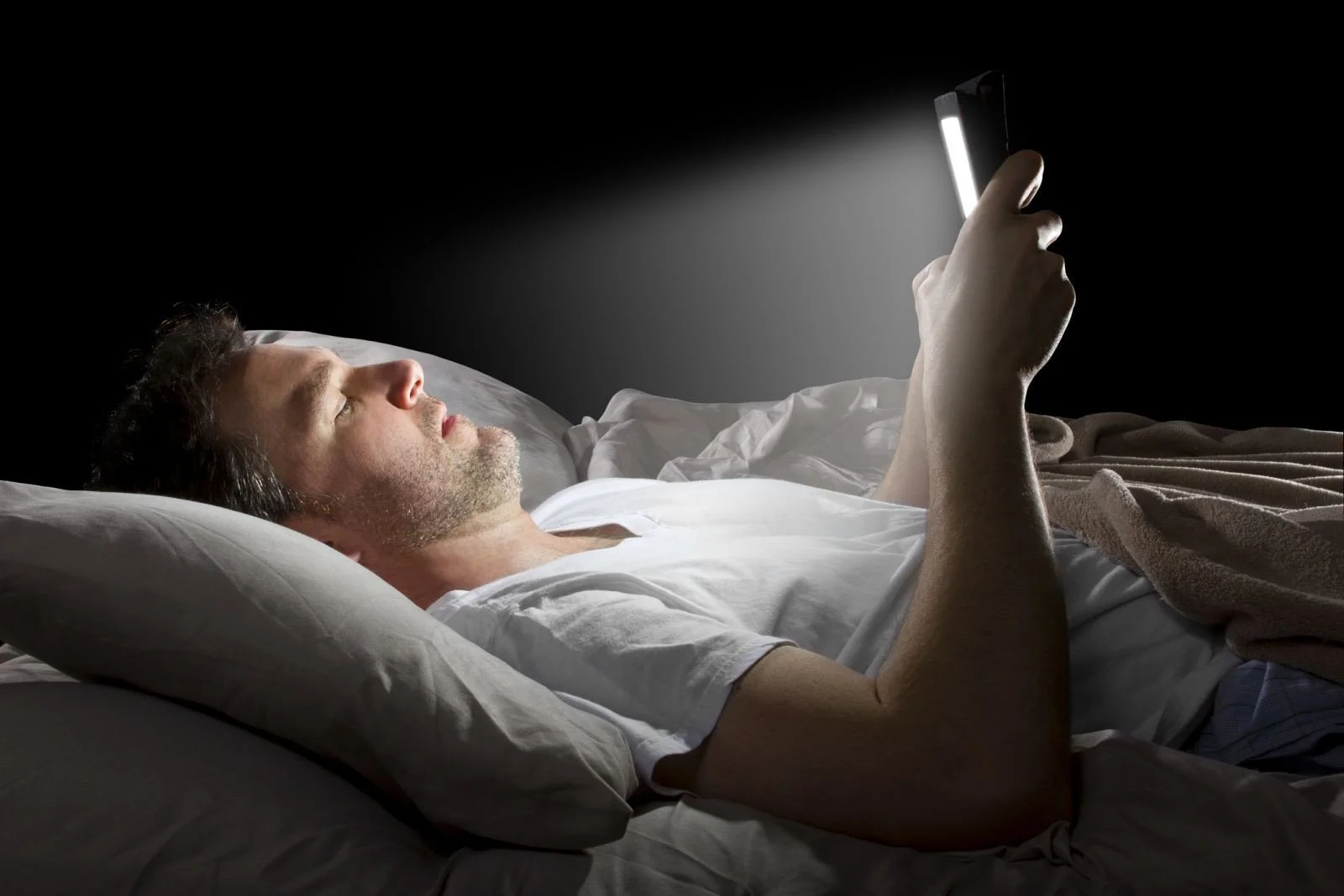
Credit: image: © Innovatedcaptures | Dreamstime.com
What Is Blue Light?
“a band of the visible light spectrum that has a shorter wavelength and produces higher energy than other colors of light: occurring in sunlight and emitted by electronic devices that use LED technology.”
Credit: Dictionary.com
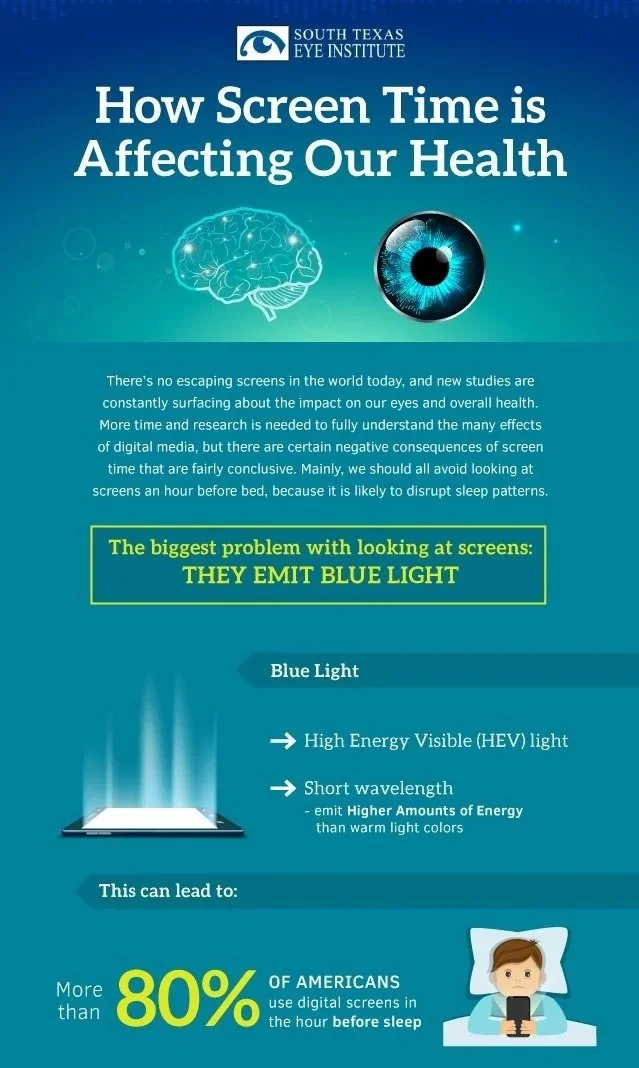
Credit: Effects of Screen Time on Health Infographic - 1 Oct. 2017
The Role of Light
Not all light affects the body in the same way.
Blue wavelengths–common in LED lighting and digital screens, are particularly powerful. During the day, they help boost alertness and mood. But at night, they become disruptive.
Our eyes contain specialized photoreceptors that are highly sensitive to blue and green light. These signals directly influence the production of melatonin, the hormone that tells the body when it's time to sleep.
When we are exposed to blue light at night, melatonin production is suppressed, delaying our sleep, and altering our bodies natural rhythm.
In one study, exposure to blue light suppressed melatonin for nearly twice as long as the other wavelengths and significantly shifted the body's internal clock.
Wahl, S., Engelhardt, M., Schaupp, P., Lappe, C., & Ivanov, I. V. (2019)
No “Off” Switch
Over the course of our history, our days have been full of natural light, and our nights have been solely lit by our ability to utilize fire and moonlight. There has always been this major difference between our days and nights, but now, the reality and contrast between the bright day and night have drastically narrowed.
We are at the point where our society exists in a near-constant state of illumination. From personal screens, to our home lights, or even the city glow that continues to worsen. We are entering into an era where we might not be able to find any true dark spaces anywhere.
Without this separation between constant glow and our natural state. Is there a place where we can truly power down? or has the time come and gone for us to truly escape this illuminated world.
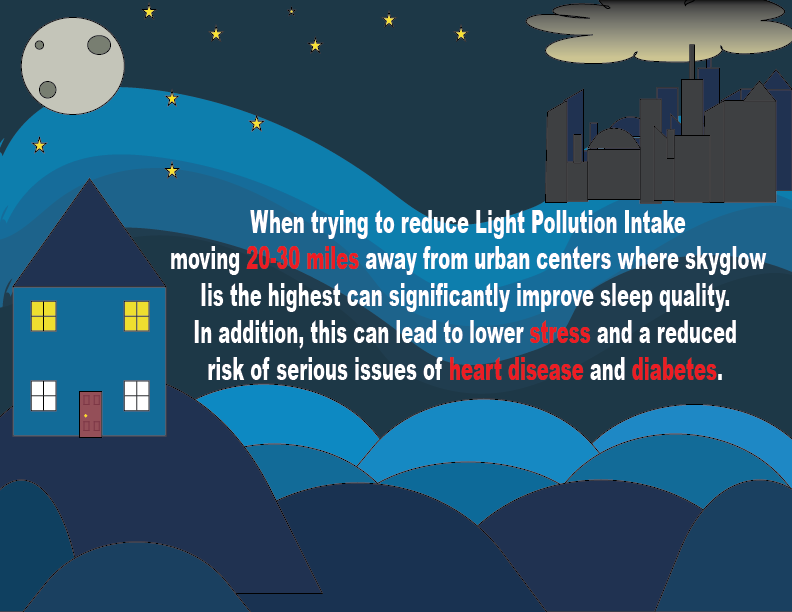
Courtesy Of Ryan McCaffrey
The Bigger Impact
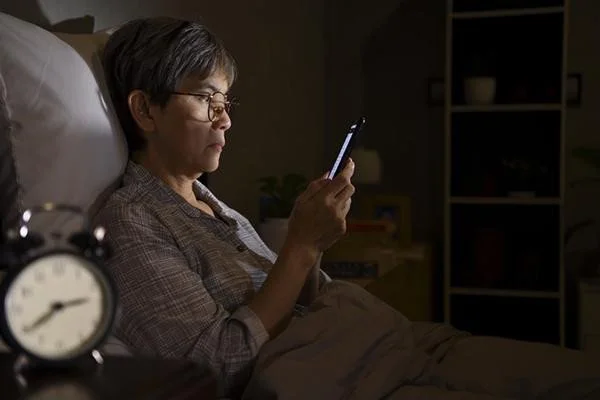
“The study included nearly 89,000 people ages 41 and older who wore light sensors on their wrists for one week. Researchers then tracked their risk of heart disease over the following 9.5 years. People with the highest exposure to nighttime light had higher risks of coronary artery disease, stroke, atrial fibrillation, heart attack, and heart failure.”
(Julie Corliss, December 4, 2025)